

Almost everything Malta imports crosses the sea at some point, but how it travels makes a real difference to your costs, delivery dates and the condition your goods arrive in. For businesses buying from mainland Europe, the choice usually comes down to three options: road freight by trailer, sea freight by container, or air freight.
Each has its place. In this guide we explain how each option works for shipments to Malta, compare them on cost, speed and cargo type, and share the questions we ask before recommending one.
At a glance
Before going into detail, here is a quick summary of how the three options compare. Use it as a starting point, then read on for what each involves and when it makes the most sense.
- Road freight: best for regular imports from mainland Europe. Moderate cost and speed on weekly schedules, with one trailer carrying your goods door to door.
- Sea freight: best for large volumes and goods from outside Europe. The lowest cost per unit for large volumes, but the slowest, with handling at ports.
- Air freight: best for urgent, small or high-value consignments. The fastest and the most expensive, with several handling points along the way.
Road freight: door to door from mainland Europe
For most imports from mainland Europe, road freight is the practical default. Your goods are collected from the supplier, loaded onto a trailer and driven to a port in Italy, where the trailer crosses to Malta by ferry and continues to your premises. Because the same trailer carries your goods all the way, there is less handling and one point of responsibility.
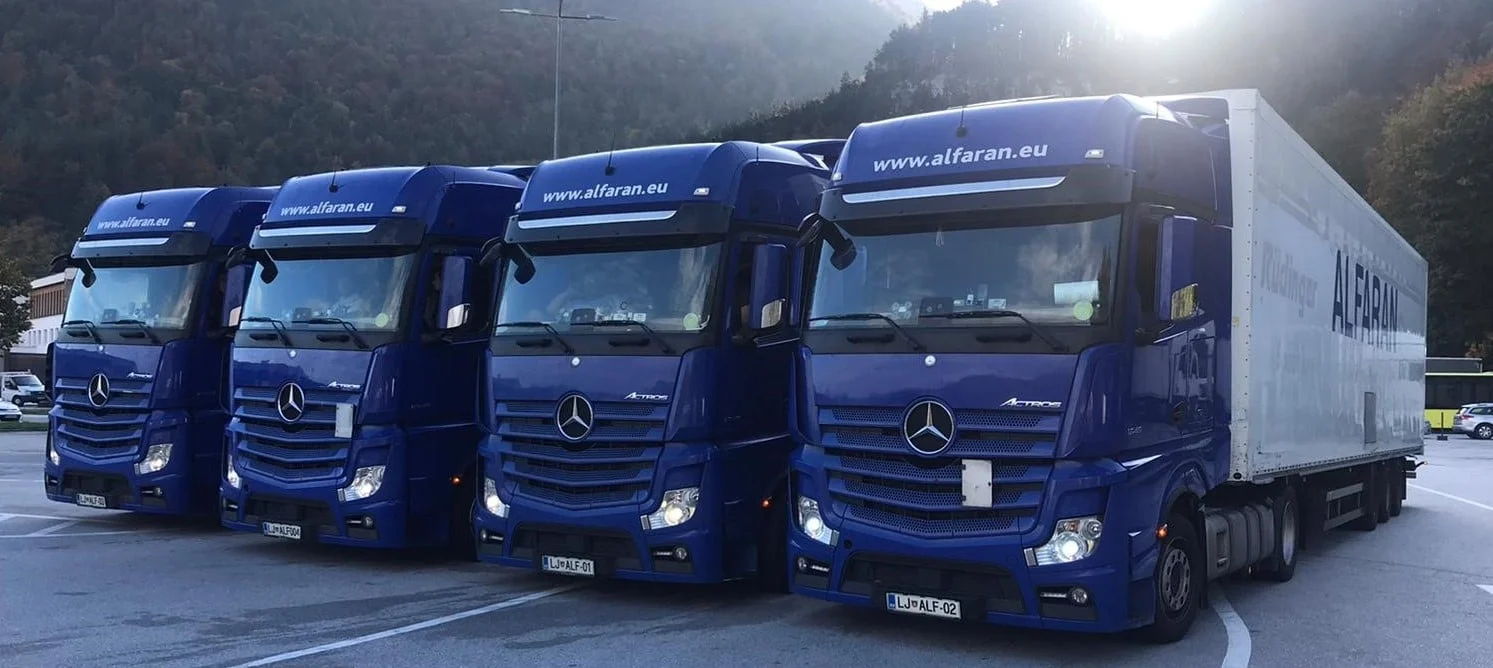
Road freight is our core service. We run weekly pick-ups across Europe on fixed schedules, collecting directly from your supplier or through our agent network. Our fleet includes mega tilt and mega box trailers of up to 102 m³, flatbeds for awkward loads and refrigerated trailers for chilled and frozen goods (see our refrigerated transport service).
If you have enough cargo to fill a trailer, book a full truck load (FTL). If not, share space through groupage. Our guide to Groupage vs Full Truck Load explains how to decide.
Sea freight: economical for large volumes
Sea freight moves goods in standard containers on scheduled shipping lines. It is usually the most economical option per unit for large or heavy consignments, and often the only realistic one for goods from outside Europe.
With a full container load (FCL), a 20 ft or 40 ft container carries your goods alone. With less than container load (LCL), you share space and pay only for the volume you use. We also arrange high cube containers for bulky cargo, reefer containers and flat racks for oversized items.
The trade-off is time. Containers wait for vessel departures and are handled at ports, so transit is slower and less predictable than road freight from Europe. Exported containers also need a Verified Gross Mass declaration, which our weighbridge service can certify at our Ħal Far depot.
Air freight: when time matters most
Air freight is the fastest way to get goods to Malta. It is the right choice when a delay would cost more than the freight itself: a spare part for a stopped production line, samples for a client meeting, or urgent medical supplies.
It is also the most expensive option. Airlines charge on the greater of the actual weight or the space a shipment occupies, so light but bulky goods can cost more than expected, and size, weight and dangerous-goods limits are tighter. Through our network of trusted partners, we arrange short-notice air freight to meet tight deadlines.
How to choose: cost, speed and cargo
Three questions usually point to the right answer, whether you are importing a few pallets or a full project. Work through them in order, and the most suitable option, or combination of options, for your shipment usually becomes clear.
How much are you shipping?
A few pallets from Europe travel well by road groupage, and a full trailer’s worth by FTL. Large volumes from further afield are often cheaper in a container.
How quickly do you need it?
If goods must arrive within days, consider air. If you can plan around weekly departures, road freight balances speed and cost well. If you hold enough stock to cover a longer wait, sea freight keeps costs down.
What are you shipping?
Temperature-sensitive goods need reefer trailers or containers. Heavy or oversized items may need flatbeds, flat racks or project planning. Dangerous goods follow specific rules for each mode.
Sometimes the best answer combines modes. When we moved an unassembled power station to Malta, most of the cargo travelled by road and rail from Poland to Genoa, then by sea, with a chartered vessel for the largest boilers. Read the full project story.
Choosing the Right Freight Option for Your Business
There is rarely one right answer for every shipment. Road freight suits most regular imports from mainland Europe, sea freight keeps costs down for large volumes, and air freight earns its price when time matters most.
Because Alfaran Trailers arranges road, sea and air freight, we can recommend the most suitable option, or combination of options, for each consignment and manage it from collection to delivery.
Frequently asked questions
What is the cheapest way to ship goods to Malta from Europe?
For small and medium consignments, road groupage is usually the most cost-effective, because you pay only for the space you use. For very large volumes, a full trailer or container often works out cheaper per unit.
Is road freight faster than sea freight to Malta?
From mainland Europe, generally yes. A trailer travels door to door on a fixed weekly schedule, while containers depend on vessel departures and port handling.
Can you transport refrigerated goods to Malta?
Yes. Our temperature-controlled trailers hold settings from +25°C to −25°C, and we arrange reefer containers for sea freight.
Are my goods insured in transit?
All goods we carry travel under CMR conditions, which set the carrier’s liability. Full insurance cover is available on request.
What do you need from me to prepare a quote?
The collection and delivery addresses, a description of the goods, their packed dimensions and weight, any special loading needs and any access limits on site. Our freight quote checklist explains each one.

